
This is not a holiday purge. It is a plan for actually enjoying the holidays in your own house.
My former mother-in-law taught high school chemistry in Ohio for thirty years, and for eleven months of the year she was the most patient woman I have ever known.
In the twelfth, she came for the dining room table.
By late November that table had been accumulating since roughly Easter. Months of mail. Homework from a school year that had already ended. Catalogs, a stapler, a jar of something, and several items nobody in the family could identify or claim. Once a year, this mild-mannered, genuinely kind woman would stand at the end of that table and beg her people to get their crap off of it, and I remember thinking, with some concern, that her head might actually pop off.
She was not wrong. She was just about eight weeks late.
I get itchy for the holidays the minute September shows up. If I could put the tree up before Halloween without drawing serious judgment from people who love me, I absolutely would. So I am not going to pretend this is a reluctant, obligatory piece about getting your house in order. I am delighted it is September. I am already thinking about November.
Which is the whole reason to write this now, eleven weeks out, instead of on the second Tuesday of November when it is too late to do anything except what most of us do. Forty frantic minutes before people arrive, moving piles from one room into another and shutting the door on the guest room.
You know that forty minutes. Everybody knows that forty minutes.
The forty minutes is not really the problem. The problem is what it does to the six hours that follow.
What you are actually protecting
You spend the evening slightly braced. Somebody drifts toward the hallway and you feel it in your shoulders. Somebody opens the wrong closet. You are hosting, technically, but a part of you is standing guard the entire night.
I wrote recently about how the most interesting thing in a room is usually something that already belongs to you, and how a house that tells you something about the person living in it beats a house that is merely finished. Shameless plug, go read it if you missed it. There is a practical version of that idea worth saying plainly here: when you own your things and arrange them like you love them, you relax. And when the host relaxes, the room relaxes.
That is not a woo-woo statement. It is the most reliable thing I know about having people over. Guests do not take their cues from your house. They take them from you. A woman who is comfortable in her own dining room makes everyone at the table comfortable, and no amount of styling will do that job for her.
So the ambition here is not a finished house. It is being present in it. Standing in your kitchen at nine at night with a glass of wine while three people you love argue about something ridiculous, and not once thinking about the pile on the dining room chair.
You do not have to do the whole house. Four zones.
There is a reframe that makes eleven weeks feel generous instead of terrifying.
You are not preparing your home. You are preparing roughly four zones, and they are the same four in nearly every house I have ever worked in. The front door. The room where they eat. The room where they sleep, if anyone is staying. And the kitchen counter, because people end up in the kitchen no matter how beautifully you arranged the living room. This is a law of physics.
Nobody is inspecting your linen closet. In twenty-five years, no guest has ever gone home from a dinner party and remarked on someone’s garage.
Four zones, eleven weeks. That is a pace that will not cost you a single weekend you would rather spend somewhere else.
The four questions
Before you touch anything, I want to give you the filter I use with clients, because it is the difference between a house that looks clean and a house that feels like you.
For any item you are holding, ask:
Does this support something I actually want to do here?
Does it contribute to the way I want this room to feel?
Does it reflect who I am now, or who I used to be?
If I were starting fresh today, would I choose to bring this in?
Question three is the one people are least prepared for, and it is the one that changes the most outcomes. It is also why this works better than any rule about whether you have used something in the past year.
Run those four questions and the sorting stops being a negotiation with yourself. You are no longer asking whether you can bear to part with something. You are asking whether it belongs in the life you are actually living, which is an easier question and a much kinder one.
Weeks one and two: the front door
Start here because it is small, finishable, and the first thing every single person will see.
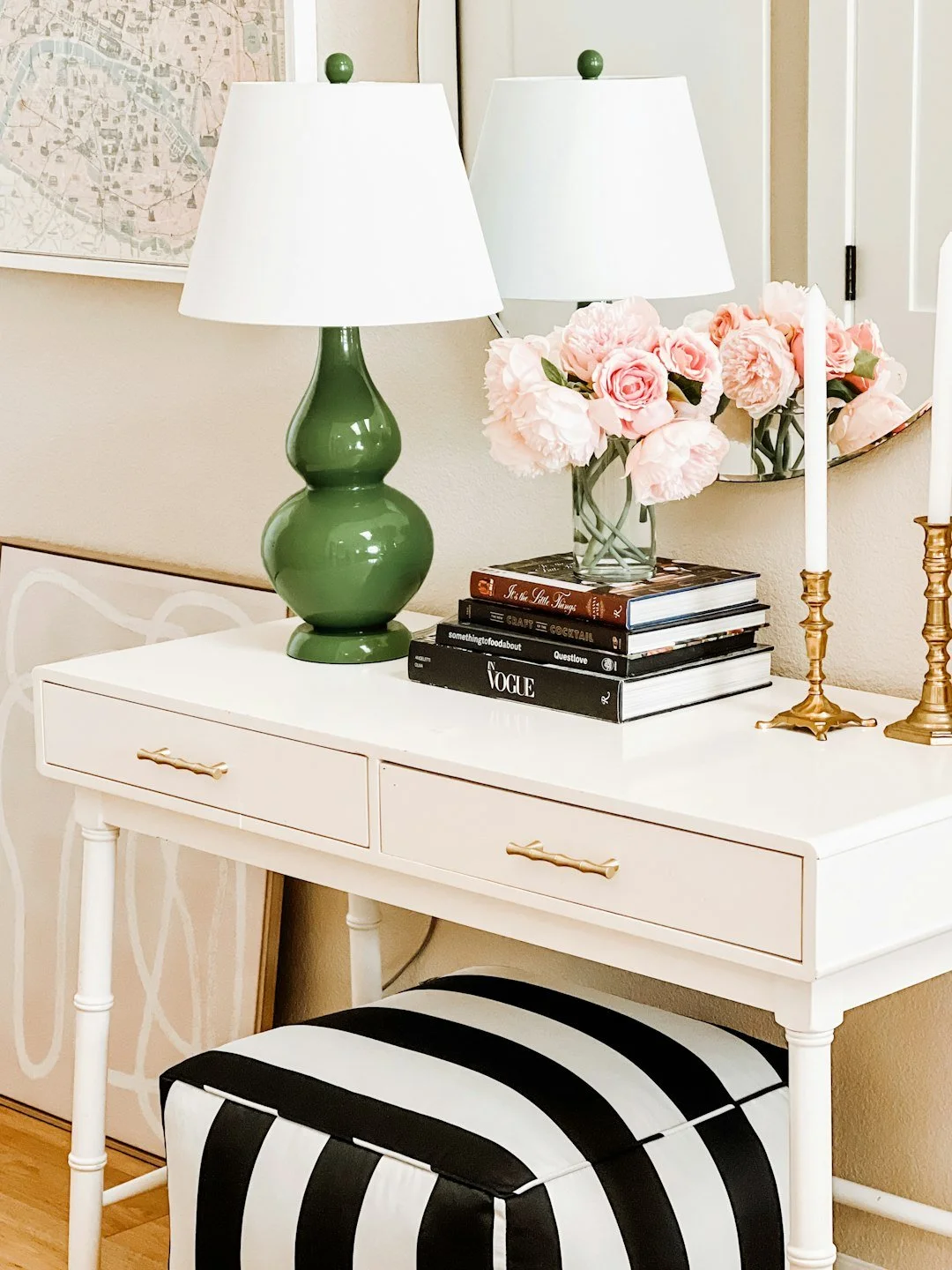
Entries collect. That is simply what they do. Shoes belonging to a child who now lives in another state. A basket of things that were going somewhere in 2021. Coats for a climate you may not even live in anymore. When my daughter was house hunting here in New Orleans, I kept noticing how few homes have a proper foyer and a coat closet, and the realtor finally laughed and reminded me that nobody wears coats and everyone sits on the porch anyway. She had a point about what a front door is really for.
Clear the surfaces down to one or two things. Three objects with room around them read as intentional. Nine objects read as a landing zone.
Then comes the part that matters more than the clearing. Put something there worth looking at. A lamp. One good picture. The bowl you bought on a trip twenty years ago. You already own it. It is probably in a box.
One rule for all eleven weeks: whatever leaves a room has to leave the house the same day. Bags by the front door become furniture within seventy-two hours. Schedule the donation drop-off before you start sorting, not after.
Weeks three through six: the dining room and the guest room
The dining room is where the pretending happens. In most houses it is not a dining room for eleven months of the year. It is a staging area, a homework table, a place where mail goes to think about its life. Then once a year we are expected to seat twelve people at it.
My former mother-in-law was fighting an annual battle she could have won in September. Four weeks this fall, and nobody’s head has to pop off in front of the in-laws.
Go slowly, because this is where the emotionally loaded things live. The china. The crystal that has to be hand-washed. The serving pieces from a wedding that ended, or a mother who is gone.
You will hit items you cannot decide about. That is the expected part, not a failure. Build a shelf somewhere out of the way, put those specific things on it, and give yourself a year. If something comes off that shelf in November because you genuinely wanted it, it has earned its place and it stays. If it sits untouched, you have your answer, and you donate it without opening the box. That last part is not optional.
The guest room is easier and enormously more rewarding. Most guest rooms are storage with a bed in them. Ask the four questions on behalf of the person who will sleep there. Empty a drawer. Clear two feet of hanging space. Put a lamp on the nightstand bright enough to actually read by, which almost no guest room lamp ever is.
And if you are feeling like it, buy new sheets and a duvet. Nothing makes a guest room look inviting faster, and it takes an afternoon. If the old set is ratty, it goes. It is not going to improve in the closet.
Weeks seven through nine: the kitchen counter
Not the whole kitchen. The counter.
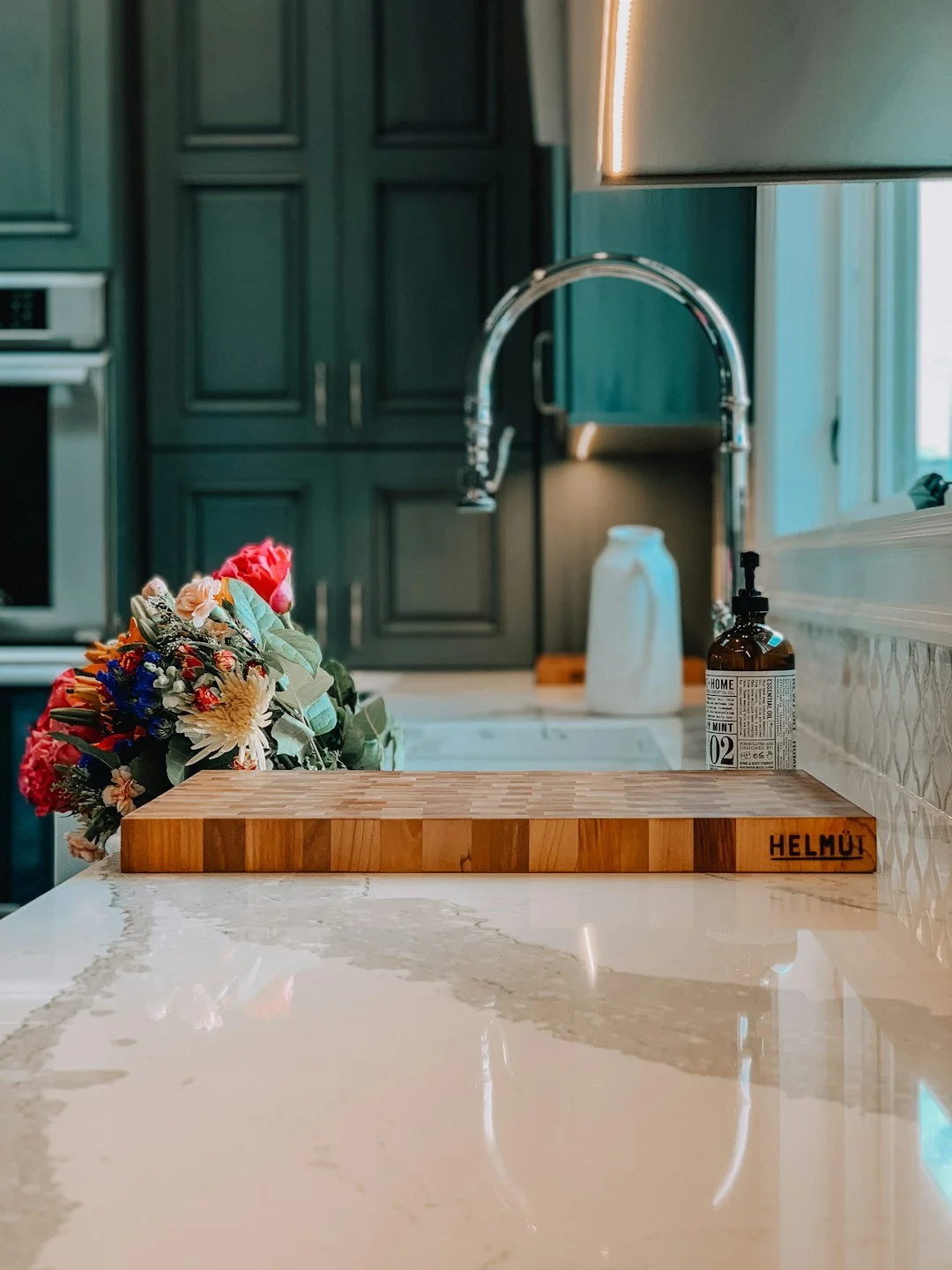
The counter is almost always carrying six appliances that get used twice a year. Move them. Not out of your life necessarily, just off the counter and into a cabinet, which you will have room for by now because you have spent four weeks in the dining room learning how to release the third set of dishes.
The standard I use in a kitchen is one good version of a thing rather than four mediocre ones. One knife you love instead of a drawer full of dull ones. That sounds austere and it is the opposite. Cooking gets easier when the tools you reach for are the ones you actually like.
It also gets you the thing every host needs on the fourth Thursday in November, which is an empty stretch of counter to set a platter down on.
Weeks ten and eleven: nothing
I mean it.
The last two weeks are deliberately empty, and they are the most important part of the plan. This is the buffer for the week you get sick, the week work explodes, the week you simply do not feel like it. Any plan that assumes eleven productive weeks out of eleven fails somewhere around week five and takes your confidence down with it.
If you do not need the buffer, use it for the good part. Walk the rooms and look at what is left with room around it. Pull something forward that has been hidden behind other things. Hang the thing that has been in a box since the last move.
I say that with some authority. I hung a chandelier last week that I bought on Murano nearly thirty years ago and then left packed away through an entire move. It is up now, close to the ceiling because our dining room doubles as a hallway, and it is not remotely where I would have put it thirty years ago. It makes me happy every single time I walk through that room.
And now that it is up, I am painting that room a deep, dark green. Which I have wanted to do for years, and which is going to look extremely good by candlelight in December.
Then invite somebody over
You do not need a plan for that part. That part is the reward.
But I would like you to arrive at the last week of November having already done the work, so the only things left are cooking, answering the door, and being genuinely, unguardedly glad that people are in your house.
If any of this feels right and you are not sure how to handle the emotional part, I put together a free guide that covers the psychology underneath all of it. Why we hold on, why the hard items freeze us, and the framework I use with clients so they do not end up regretting what they released. Forty-five pages, free, called The No-Regret Foundation.
And if you want the full system, including the day-by-day roadmap, the prompts for the conversation with adult children about who wants the china, and the curation work that comes after the editing, that is what From Clutter to Curated is. It is $97, self-paced, and it is the same process I use with clients.
Eleven weeks. Start with the front door.
Please let me know how it’s going! Happy to help with any advice too.