I Came to Write. I Stayed to Eavesdrop.
On eavesdropping and seeing yourself in a stranger
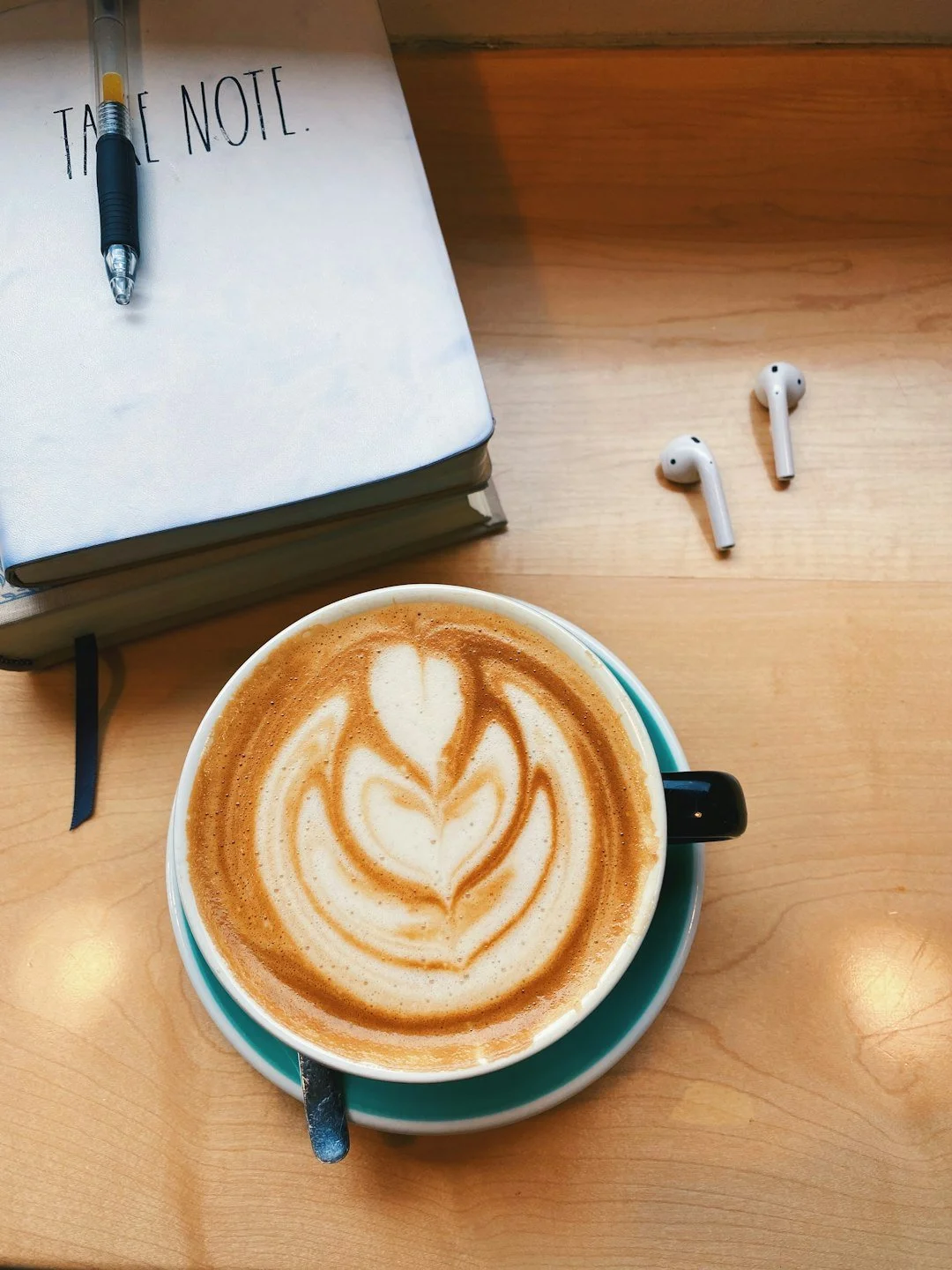
I was at the coffee shop because I had evacuated my own house. This is a thing I have to do sometimes, because if I don’t, I will quietly become a shut-in. Writers Becoming Shut-Ins. And there’s next week’s Substack. I had a design detail I couldn’t crack and a blank page I was avoiding, and the cure for both, I’d decided, was ambient noise and someone else making my coffee.
And then she sat down behind me.
Above-coffee-shop-appropriate decibel level. The kind of voice that makes you straighten your spine and tighten your jaw and think, very uncharitably, that the world really does not need any more drama right now. I did not turn around. I kept my back to her on principle. I opened my laptop and tried to look like a person doing important work.
About five minutes in, I gave up. I stopped pretending to write and just settled in with my coffee for all the details. By the time she was finished I would have cast her in The Real Housewives of New Orleans. In my defense, I hadn’t been invited to the conversation, except by way of her inappropriately loud voice, which I chose to interpret as a kind of open invitation.
She was going through a divorce. I won’t say more than that, because even though I don’t know her, it’s still not my story to tell. The logistics, the lawyers, the anger, the impossible math of dividing a life. And somewhere in the middle of it I noticed something that had nothing to do with the details.
She was holding on. Not to the marriage, exactly. But to the control. The management of him. The belief, buried so deep she probably couldn’t name it, that if she just handled it the right way, he might still become the person she’d been waiting for him to become.
And instead of thinking “just let go,” which is what it looks like from the outside and is also the most useless sentence in the English language when you’re in the middle of it, I thought: oh. I know this.
I know this grip. I’ve had it. I’ve been the woman holding something that was clearly hurting me and calling it responsibility. Or loyalty. Or strength. Or just “handling it.”
This isn’t an article about her. This is about what she reminded me of.
The Grip
Here’s what I’ve learned about holding on: it almost never looks like holding on.
It looks like staying on top of things. Keeping the peace. Managing someone else’s chaos so it doesn’t spill into your life, or so it spills in a direction you can predict. It looks like anger, sometimes. Righteous, justified anger that feels like armor but functions more like an anchor.
And underneath all of it, always, is a question you’re not ready to ask yet. Some version of: if I let go of this, who am I? What do I have? What was it all for?
I’ve seen it in romantic relationships. In family dynamics. In friendships that stopped fitting years ago but neither person will say it out loud. Once you recognize the pattern, you can’t unsee it. Someone white-knuckling a situation that’s slowly destroying them, and genuinely believing the grip is the only thing holding them up.
I know. Because I was that person. More than once.
The Marriage
My first husband is a good man. A good father. I like his wife. Our kids are good.
And for a long time, none of that mattered to me emotionally, because all I could feel was that I had failed.
The marriage didn’t end because anyone was a villain. It ended because we were young, and I was immature, and I wasn’t self-aware enough to do things differently. I didn’t handle it well. I look back at the version of me who moved through that time and I wish I could sit her down and say a few things. But I can’t. She had to figure it out the long way.
What surprised me was how long the weight of that stuck around. The marriage was over but the judgment wasn’t. The voice in my head that said I should have been better, should have known more, should have tried harder. Even as we both rebuilt. Even as we became genuinely good co-parents. Even as we arrived at something that actually looks a lot like friendship.
It took years to understand that an ending isn’t automatically a failure. That two people can be happy in separate lives and that the story still counts. All of it. The good years, the hard ones, and the part where you finally stop punishing yourself for not being someone you hadn’t become yet.
The One After
The next relationship was a different kind of weight entirely.
I won’t go into detail here either, but I will say this: that person was not a good person. She was a liar. And by the time I fully understood what I was dealing with, I had already invested years of trust and love and life into someone who was, at her core, dangerous.
The shame of that is a specific flavor. It’s not “I should have been better.” It’s “I should have known.” And there is a particularly brutal kind of self-recrimination that comes from trusting someone who turns out to be the opposite of what they presented. You replay everything. You go back through conversations and moments and red flags that you can see so clearly now, and you wonder how you missed them. How you were so stupid.
I carried that for a long time. The anger at her, yes. But really, the anger at myself, dressed up in her clothes.
And the desire for some kind of justice or revenge or at least an acknowledgment from the universe that this was not fair and I deserved better. I wanted that so badly. I gripped it. I held onto the outrage because the alternative was feeling the sadness and the shame underneath, and the outrage felt so much more powerful.
It wasn’t. It was just heavier.
Putting It Down
I wish I could tell you about the moment I let go. The epiphany. The walk on the beach. The journal entry that changed everything.
There wasn’t one.
It was slow and uncinematic. I put it down. I picked it back up without realizing it. I noticed. I put it down again. Some days I was lighter, and some days the grip came back, and I thought I hadn’t made any progress at all.
What I can tell you is what I was looking for during that time. I read everything. Books, articles, essays. I listened to podcasts constantly. I wasn’t looking for advice, not really. I was looking for proof that someone had survived this. Someone who had been irrational and angry and ashamed and full of self-blame and had somehow come out the other side. I wanted to know how they did it. And honestly, I wanted to know how long it took. That’s the most desperate question, isn’t it? How long will this last?
Nobody could answer that. But knowing other people had made it through was enough to keep me going until I made it through too.
So, if that’s why you’re reading this, let me be that person for a second. It comes when it comes. You can’t rush it. The work matters, but there’s no timeline. And one day you’ll notice that the thing you were gripping is just... not in your hands anymore. Not because you threw it. Because you forgot to pick it back up.
What’s on the Other Side
I want to be careful here because the other side isn’t a glow-up. It’s not a montage. It’s not even particularly tidy.
But it’s good. It’s really, genuinely good.
The relationships in my life now are the highlight. Mabel, my family, and friendships that are honest and actually fit. Not every friendship has survived this version of me, and I’ve made peace with that. As you have heard from me before, I’m not everyone’s cup of tea. And not everyone is mine, and that’s just as okay. I don’t have to like everyone enough to be friends. Turns out that’s not a wound. It’s just a fact. And it frees up a tremendous amount of energy when you stop performing for people who were never going to get you anyway.
I will say this, though. There is still a small, very alive part of me that sees someone at a party or on a talk show and thinks “we should absolutely be best friends.” When I was younger, I was fully convinced that Julia Roberts and I were destined to be close. I just knew it. We would have been great together. Age and wisdom have taught me that real friendships are built slowly, over time, through honesty and showing up and all the unglamorous things that don’t happen in a movie. But that twenty-five-year-old who wanted to be Julia’s bestie? I still like her. She had good taste.
I’m bolder in my work. My design career is evolving in some very new and fun ways, and I think that’s directly connected to how I feel about myself, because it’s hard to bring confidence and creativity to a project when you don’t feel worthy of success. My newer endeavors, the writing, the online work, are imperfect and still in their infancy and not yet what I would call successful. But I’m in them. I’m excited. I’m not waiting for permission to try things that might not work.
I still catch myself. I still have moments where I have to regulate, where the old patterns of self-protection try to reassert themselves. The difference is that I recognize them now. And I choose openness, but a more discerning openness. I’m happy to make a new friend, happy to let someone in, as long as it’s a genuine fit. Not everyone has to be in your life. And the people who are there should feel they belong, not like a project you’re managing.
What the Grip Is Really About
If I’m being very honest, and apparently today I am, all of it comes down to the same thing. The marriage, the narcissist, the friendships that outgrew themselves, every single version of holding on too long and letting go too slowly. Underneath the anger, underneath the control, underneath the desperate hope that someone will change, there’s a question about worthiness. Am I worth more than this? Do I deserve better? And if I do, can I actually stand in that and believe it?
That’s the heavy thing. Not the other person. Not the situation. The doubt about yourself.
And putting that down is the hardest thing of all. Because it’s been there the longest. Longer than any relationship. Longer than any grudge. It’s the original weight, and everything else is just what you pile on top of it so you don’t have to feel it directly.
I don’t have a clean ending for this. I’m not going to pretend I’ve arrived at some permanent state of enlightenment where self-doubt no longer exists. It does. It’s just quieter now. And when it speaks up, I know what it is, and I can set it down a little faster than I used to.
That’s the work. That’s what’s on the other side. Not perfection. Just practice. And the slow, stubborn belief that you’re worth the effort of staying open, even when staying open is the scariest thing in the room.
Your hands are going to be empty for a while. That’s okay. You’ll figure out what to fill them with. It turns out there are much better things to hold.