
Seven books in, I finally wrote a novel. The vulnerability didn’t go away, and neither did the urge to keep fixing it.
Delicious Perspective Books
There are four novels in my drawer.
Not literal drawers, of course. Laptop folders, mostly, and one dog-eared legal pad from somewhere around 2015. But you know what I mean. Four stories I started with real heat in my chest and abandoned somewhere in the middle, where the characters stopped doing what I wanted them to do and the plot went slack and I started to suspect I wasn’t who I thought I was. I learned something from each of them, though it took me a long time to say it out loud. Starting a story is easy. The messy middle and the end are where writers actually get made.
My first novel has been out since December. This is the first time I am mentioning it here. It’s fine. I’m fine.
I have thought about why for four months. Substack is, famously, a platform full of writers. Some of the best reading I do every week comes from people on this platform who can write circles around me. So when Flirting with Fate went live in December, I told my family and my friends, I posted it on Instagram, I sold copies at the holidays. And I said nothing here. Not one word. I let the release come and go and kept writing about everything else.
I’m telling you now because the sequel comes out in July, and at some point you have to stop performing the role of the person who isn’t nervous. So. Here I am.
For years I wrote everything but the novel.
My first book was a project, not a piece of writing. I worked with an illustrator I loved, Marina, to create a new edition of Clement Moore’s Twas the Night Before Christmas, a book that had been a favorite in my house when my kids were little. Moore wrote it in 1823 and has been in the public domain for longer than any of us have been alive, which meant I could take on the reillustration and the publishing side without needing to produce a single original sentence. That was the point. I wanted to learn how publishing works before I tried to put my own writing inside it.
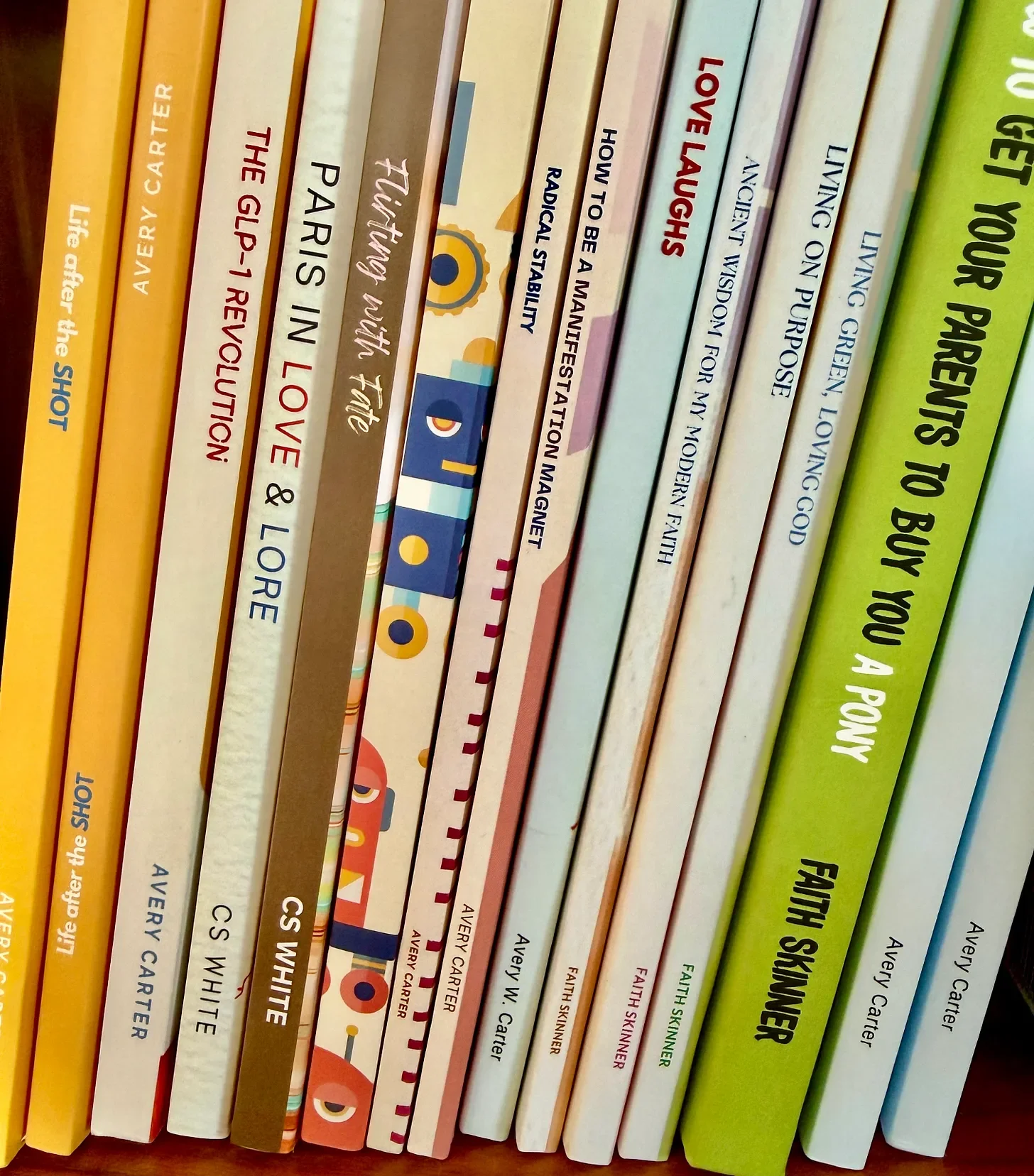
From there I started writing under the pen name Avery Carter. A small shelf of non-fiction, mostly about work I had done for years and wanted to hand to people earlier in their careers than I had it. Management and staff development. Midlife career pivots, especially for creatives. More recently, two books on my own GLP-1 journey. Under my own name, CS White, I wrote Paris in Love & Lore, which grew into The Paris Insider Collection and into most of the essays on this Substack that my readers respond to. I am aware that I am one conversation away from being the dinner party guest nobody wants to get cornered by.
I loved those non-fiction books. I still do. Non-fiction is straightforward, interpretive, value-driven. You have knowledge, you structure it, you give it to readers who need it. It is teaching, essentially, just at scale. One to many. And if someone doesn’t click with the book, what they are really saying is that the topic didn’t land for them. It isn’t personal. You can revise. You can put out a second edition with new research, a sharper angle, whatever you have learned in the years since. The book is a living thing that can keep getting better.
A novel can’t do that.
A novel gets published and then it just sits there. You can’t issue an update. You can’t add a chapter because you thought of a better turn six months later. If the voice doesn’t work for someone, they are not disagreeing with a topic. They disagree with you. There is no expertise to fall back on. Nowhere to hide. You just have to be good, trust that you are, and hope the reader comes along.
That, I think, is what kept me circling the drawer for so long.
There is also this, which I want to say plainly. Fiction has its own kind of freedom that non-fiction, by design, does not. In non-fiction, you are accountable to the facts and to the reader’s time, both of which I take seriously. But in fiction, you can make it anything you want. You invent people and move them through a world you build. Your characters can do whatever you can get a reader to believe, and all you have to do is take them on the ride. Easier said than done. That’s the whole craft. But it is also freeing in a way that is hard to describe if you have spent most of your writing life inside the container of the true.
And then, last year, I finally opened one of the drawer novels.
Flirting with Fate is a suspense romance set in Miami. Two women, a dangerous family, a PR firm run by best friends, and the slow unfolding of a secret that threatens to undo everything. I wrote it in stolen hours across a long stretch of months, further than I had ever gone before in any of the drawer novels. I learned what the messy middle actually asks of a writer. I learned that a plot you have outlined on paper doesn’t behave the way it did on paper once actual people are moving through it. I learned that the ending is the hardest part. It either earns the rest of the book or it doesn’t.
I self-published it. It was the right call for this book. Whether I stay on that path or try for an indie press for the sequel is an honest open question in my head right now, and I am in no rush to answer it.
Here is a scene from early in the book. Cat is a PR executive who has spent her whole adult life running from the family she was born into. Mae is someone she has no business noticing, at a retreat she didn’t want to attend.
Tulum was beautiful. The resort was all white linen and ocean breezes, a place where people came to find themselves and post about it on Instagram.
Cat was deeply skeptical. Until she saw Mae.
Mae was leading a sunset meditation on the beach, her voice low and soothing, her presence magnetic. Cat watched from a distance, arms crossed, trying to look unimpressed. But she couldn’t look away.
When the meditation ended, there was a bonfire. Cat, slightly drunk on mezcal and feeling reckless, made a sarcastic comment to Izzie about finding yourself in a three-thousand-dollar weekend retreat.
Mae overheard.
She turned, her eyes locking on Cat’s, and smiled. “You don’t think people can change?”
Cat felt her cheeks flush. “I think people are who they are.”
“Maybe,” Mae said, stepping closer. “Or maybe you’re just scared to try.”
“I’m not scared of anything,” Cat said, lifting her chin.
“Liar.” Mae’s smile was warm, not mocking. “Walk with me?”
And Cat, against every instinct, said yes.
They walked the beach for hours. Mae told her about growing up in Miami, about her philosophy of wellness as wholeness rather than perfection. Cat found herself confiding in ways she hadn’t expected. The pressure of expectations. The feeling of always performing a version of herself for other people.
“I spent my whole life being who everyone else needed me to be,” Cat said, surprised by her own honesty. “I don’t know if I even know who I am underneath all that.”
“So, find out,” Mae said simply.
“What if the real me is disappointing?”
Mae stopped walking and turned to face her. “What if she’s extraordinary?”
Cat’s breath caught.
They stood there, the ocean behind them, the stars overhead, and Cat felt something shift inside her chest.
Here is the part nobody told me about finishing a novel.
The vulnerability doesn’t go away when you publish. I would love to report that it does. I would love to tell you that once the book is out in the world, the writer gets to exhale. What actually happens, at least for me, is that the book is out there and I still want to keep tweaking it. Every time I reread a passage I see the tighter version I would write now. I catch a rhythm in a scene that could have landed better. I notice a beat I would move. I am a designer by trade, and anyone who has ever hired a designer knows the hardest thing is letting the room rest. You keep walking back in. You move the chair two inches. You switch out a pillow. At some point the work is the work and you have to leave it alone, but the urge doesn’t go away.
The only place the improvements can go now is into the next book.
There is also the particular experience of being read by other writers and other creators, which I hadn’t fully reckoned with before I published fiction. People who make things themselves read differently. They see the seams. They know what you were trying to do and they can tell when you didn’t quite land it. Some of the notes I have gotten still sting, months later, and I reread them more than I will admit. Vulnerability, it turns out, requires a thicker skin than I had when I started, and I am still growing into it. What has surprised me is that I have also grown to want the feedback, all of it. I love when someone cares enough either way to say something. Every comment, kind or hard, tells me something I couldn’t have seen on my own. Which does not make the stinging ones sting less. It just makes me grateful they exist.
If you have a drawer like mine, a half-finished manuscript, a business plan, a painting you never showed anyone, a book you keep telling people you are going to write, I am not going to tell you to finish it. I will just say that the fear of how it lands doesn’t disappear when you hand it over. Something else shows up instead. Something that makes you want to start the next thing before the first one has even found its full audience.
The craft is intoxicating. That is the part I didn’t know, all those years I was circling the drawer. The vulnerability is real and it stays. And so does the pull.
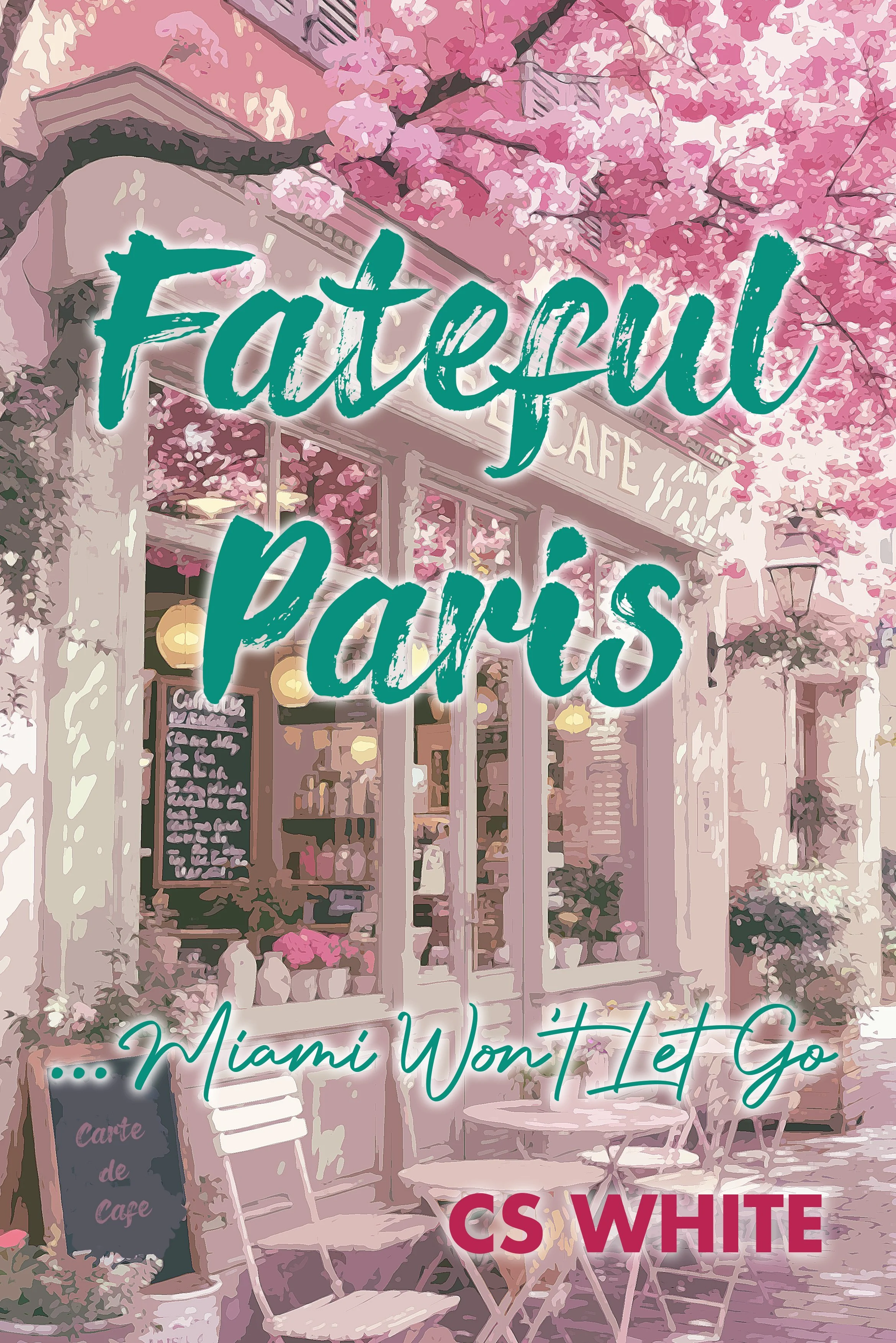
Fateful Paris, the sequel to Flirting with Fate, comes out in July. Cat and Mae in Paris, Alex and Izzie back in Miami, a new client with a notorious past, and the question of whether safety is something you can ever really build. I am deep in it now, and everything I learned from the first book is finding its way into the second.
Which is the only way any of this actually works.
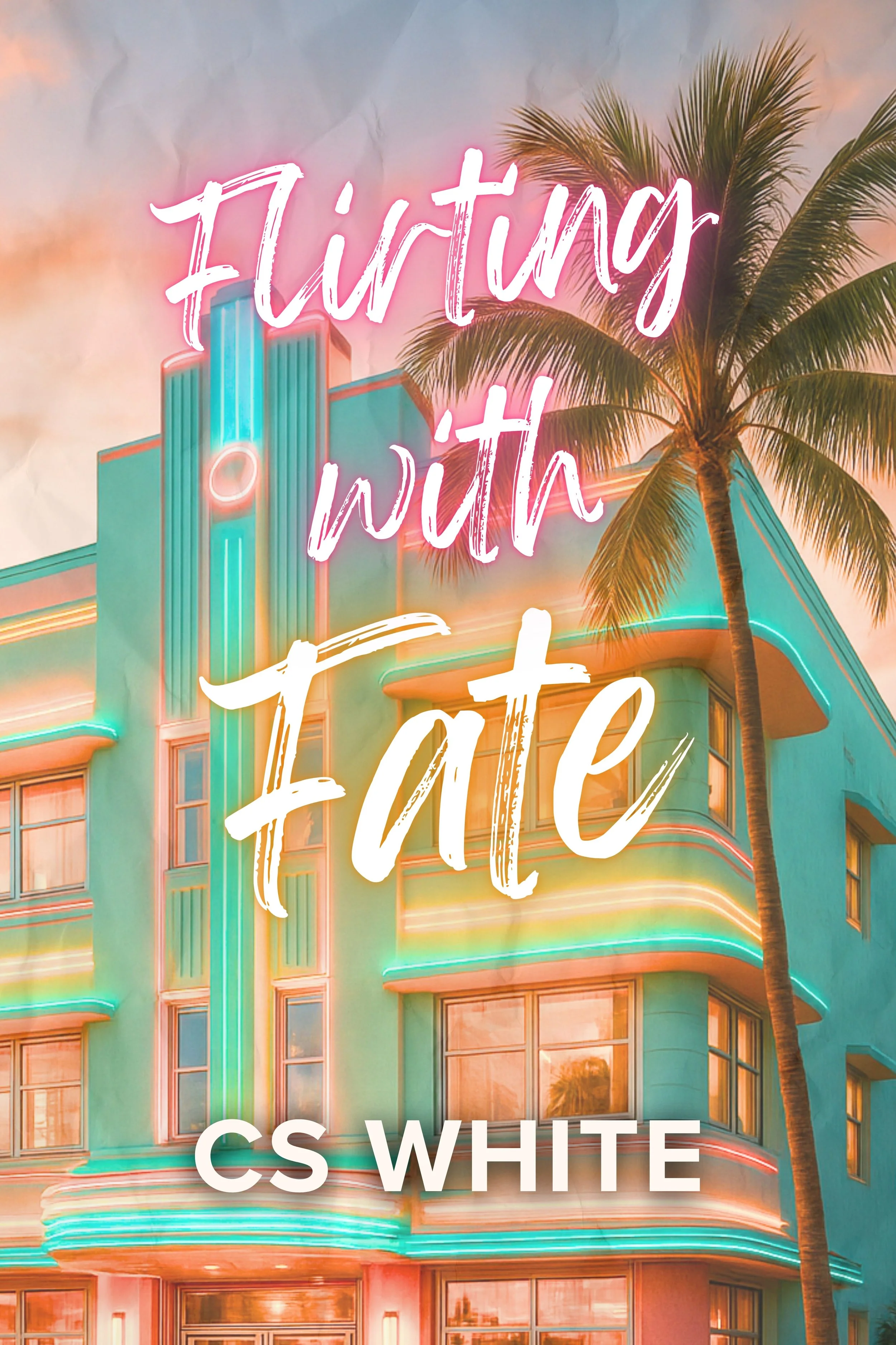
Flirting With Fate Here 👈
A footnote, because I said I would. The illustrator I mentioned up top, Marina, was extraordinary to work with, and I have recommended her to everyone who has asked. If you are working on a book, a brand, or anything that needs an illustrator with real range, email me and I will happily pass along her contact.