
On Friendship, Diversity, and the Responsibility of Being a Ride-or-Die
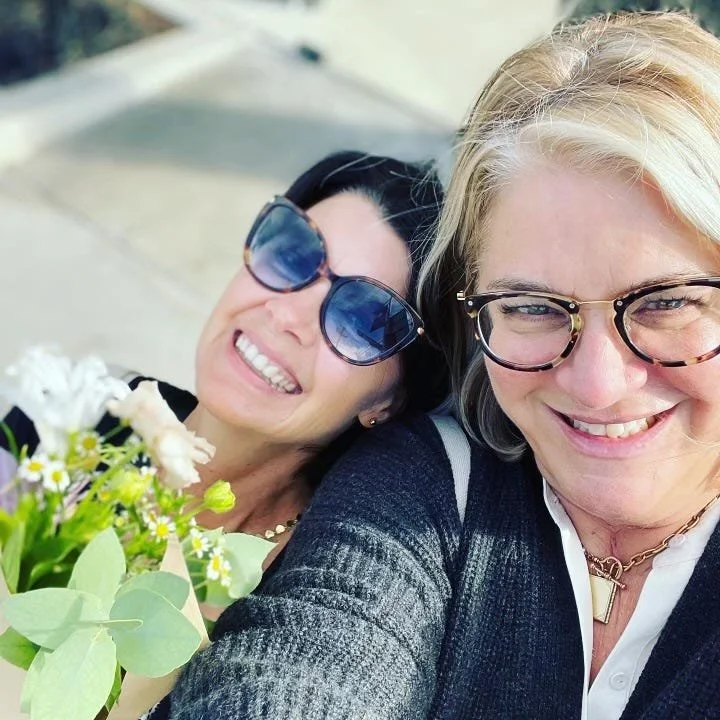
I have a friend who knows more people in Los Angeles after one visit than I knew after living there for a year.
Her name is Kara, and she is one of those magical humans who can connect with almost anyone. She has a core group of great friends, but she also has this long, beautiful list of people she’s collected over the years through hobbies, work, random encounters at coffee shops. She remembers details about their lives. She follows up. She shows up.
Watching her is like watching someone speak a language I’m still learning.
I am not naturally like this. Left to my own devices, I could spend weeks holed up in my office, writing, creating, perfecting things that probably don’t need perfecting. The wider world can wait. The networking can wait. The coffee shop small talk can definitely wait.
But my closest people? The ones I’d call from jail?
Those, I don’t take lightly.
The Crew is Select (But There’s Room)
What I’ve learned about my people: the group isn’t giant. It’s select. And that’s intentional.
The ones who know your whole story, who’ve seen you at your worst and stayed anyway, who you call when something breaks or when something beautiful happens... that circle is sacred.
But select doesn’t mean exclusive. And it definitely doesn’t mean homogenous.
My crew is diverse in every way that matters. Different ages. Different cultures. Different geographies. Different life experiences. Different opinions on almost everything except the things that truly matter.
And that diversity? It’s not incidental. It’s essential.
When I’m spiraling about a business decision, I need the friend who’s built three companies and can tell me what’s normal startup panic versus actual red flags. When I’m navigating family dynamics, I need the friend who comes from a completely different family structure and can offer perspective I’d never see on my own. When I’m stuck creatively, I need the friend who works in a totally different medium and can shake me loose.
If everyone in my squad looked like me, thought like me, lived like me? I’d just be living in an echo chamber decorated with my own blind spots.
No thank you.
What It Means to Be Chosen
There’s a moment in every deepening friendship when you realize: this person has chosen me. And I’ve chosen them.
Not out of convenience. Not because we live in the same neighborhood or work at the same company. But because there’s something here. A resonance. A safety. A sense of “oh, you get it.”
Being chosen is a gift. But it’s also a responsibility.
Because once you’re on someone’s A-list, once you’ve made the emergency contact roster, you don’t get to show up halfway. You don’t get to ghost when things get hard. You don’t get to only celebrate the wins without sitting with them through the losses.
You show up. Even when it’s inconvenient. Even when you don’t have the perfect thing to say. Even when all you can offer is “I’m here, and I’m not going anywhere.”
I learned this from the women in my life who have shown up for me that way. The friends who flew across the country when my life was falling apart. The ones who sent voice memos at 2am when I couldn’t sleep. The ones who told me hard truths I didn’t want to hear because they loved me enough to risk pissing me off.
That’s what it means to be someone’s person. You’re committed to the whole story, not just the highlight reel.
The Responsibility Goes Both Ways
But what I didn’t fully understand until recently: the responsibility isn’t just about showing up for them. You have to let them show up for you.
This is harder than it sounds.
I am much better at being the supporter than being the supported. I can show up for a friend in crisis with meals, advice, distraction, whatever they need. But asking for help? Admitting I’m struggling? Letting someone see me when I’m not holding it together?
That’s where I get stuck.
And I know I’m not alone in this. So many of us, especially women, especially those of us who’ve spent decades being the strong one, the capable one, the one who figures it out... we’re terrible at receiving.
But being in the vault, being one of the people someone trusts with everything, means you have to let them in. You have to trust them with the messy parts. You have to give them the gift of being needed.
When I was leaving LA, packing my house, planning to drive across country alone with Triscuit, my one-year-old rescue mutt, my friend Emily called out of the blue. “I’m coming,” she said. “We’re doing this together.”
She literally became my ride-or-die for ten days. The best ten days.
I didn’t ask her to come. I probably wouldn’t have. But she showed up anyway, and it changed everything about that trip—and about how I think about friendship.
Because friendship isn’t just about what you give. It’s the exchange. Being vulnerable enough to need someone and secure enough to be needed.
My best friends have taught me this. They’ve shown me that asking for help isn’t weakness, it’s intimacy, it’s trust. It’s saying, “I don’t have to have it all figured out with you. I don’t even have to look like I have it all figured out.”
The Gift of Different Life Stages
One of my favorite things about the people in my life is that we’re not all in the same life stage.
Some of my closest friends are in their 30s, building careers and families and trying to figure out what they want to be when they grow up. Some are in their 40s, navigating divorces, career pivots, and aging parents. Some are in their 60s and 70s, retired or semi-retired, finally doing the things they always wanted to do.
And me? I’m starting new businesses, about to become a grandma, figuring out what this chapter looks like.
We’re all in different rooms, but we’re in the same house.
And that matters.
My friend Rachel is in her 40s and just made a massive move—left her career in sales, moved across the country to a new city, and is starting from the bottom in design. She loves her new location, but she’s rebuilding everything. New city, new career, new name to make, new expertise to establish.
We talk when our widely different time zones allow. She reminds me what it felt like to be hungry and terrified and starting something completely new (feelings I often have in common despite our age difference). I remind her that reinvention doesn’t have an age limit, that the skills you bring from one life translate in ways you can’t see yet, that starting over always feels impossible until suddenly it doesn’t.
We prop each other up where we have similarities and differences. That’s the gift of cross-generational friendship. You’re not just mirroring each other’s experience—you’re offering what the other person needs.
My friends in their 30s remind me what it felt like to be ambitious and scared of making the wrong choice. My friends in their 60s remind me that there’s so much more ahead, that the best parts might still be coming.
We offer each other what we have. Perspective. Permission. Proof that whatever stage you’re in, you’re not alone.
Age is just one dimension of diversity, but it’s an important one. Community isn’t just about finding people like you. It’s finding people who need what you have and who have what you need.
Finding Your People Online (Or Trying To)
Community isn’t just about the people in your physical world anymore. I’m learning this slowly.
I love Substack for this. It tends to be more authentic, more vulnerable, a more real reading space than a lot of other corners of the internet. But it also gives me the same discomfort I find in the “real world.”
Finding your people online can be daunting. Scary, even. Especially for creators.
You have to put yourself and your work out there in a way that attracts other people. Like Kara at the coffee shop, but digital. And public. And permanent.
Some people are so good at this. They know how to show up, how to connect, how to build community online with what looks like ease. They comment thoughtfully. They engage genuinely. They create conversations.
And then there’s me.
I’m getting better at putting myself out there. I’m publishing more, sharing more, showing up more consistently. But it’s not an art form for me yet. It’s work. Intentional, sometimes uncomfortable work.
The introvert in me wants to write the thing, publish it, and then retreat back into my office. But that’s not how community works. Not online. Not anywhere.
You have to stay. You have to engage. You have to let people see you, respond to you, and connect with you.
And sometimes that feels just as vulnerable as asking a friend for help when you’re falling apart.
I remember my first nice comment. Someone took the time to respond to something I’d written, and it reminded me that I’m not just writing into a void. People do read what I write. Sometimes they actually comment. Sometimes they even like it.
That sounds small, but it mattered. Because building community online—especially when you’re introverted, especially when putting yourself out there feels like standing naked in a crowded room—you need those small confirmations that someone’s listening and that what you write resonates.
I’m trying. Because I think something beautiful is happening in these online spaces. People finding their tribe across time zones and continents. Writers connecting with readers who share a perspective, or who don’t and want to understand why. Creators building communities around shared values, shared struggles, shared curiosity.
It’s messy. It’s new. I’m still learning the language.
But I’m here.
Photo by Casey Connell
What Kara Taught Me (And What I’m Still Learning)
Back to Kara.
The woman who makes friends everywhere she goes. The one I both admire and am slightly baffled by.
What I’ve learned watching her: connection doesn’t have to be complicated.
She asks questions. She remembers answers. She follows up. She shows genuine interest in people’s lives. She’s present when she’s with you. Not checking her phone, not mentally writing her to-do list, just there.
It sounds simple. And maybe it is.
But for those of us who are more introverted, who need to recharge alone, who find small talk draining? It takes practice. It takes intention. It takes pushing past the voice that says, “I’d rather just go home.”
When I first moved to New Orleans, I was so far outside my comfort zone that I actually tried Bumble BFF. Yes, the friend-dating app. I met some genuinely funny, fun people. Coffee dates, happy hours, conversations that didn’t go anywhere but weren’t awful either.
Ultimately, it wasn’t the avenue for finding my people. But putting myself out there like that? That felt like a win. It helped me realize I could try other, maybe less drastic ways to connect. It loosened something. It made the next attempt feel less terrifying.
And once you start doing it more and more, something shifts. I’ve noticed I can actually enjoy the passing conversation, the person I meet who doesn’t become anything more than a nice chat. It’s no pressure. It’s not rejection or failure. It’s just data, as Mabel would say.
It’s practice like speed dating for friendship. You get good at recognizing people you want to maybe get to know better. People you enjoy talking to. And you get bolder about connecting more often until it starts to feel more natural.
We’ve all had those moments, too, where you feel like you want to be someone’s friend, but they don’t reciprocate. Don’t take it personally. Easier said than done, I know. But they might not have the bandwidth right now to be a friend. And that means they’re not meant for you at this moment.
It’s a lot like finding a rough diamond in a pile of polished stones. You have to sort through a lot to find the one that one rough stone that can be polished into a sparkling diamond. (cheesy metaphor I know, but who doesn’t love a shiny diamond- durable and beautiful)
I’m not going to become Kara. That’s not my goal.
But I am learning that community, even the wider, less intense kind, is worth the discomfort. Worth the effort. Worth showing up even when you’d rather hide.
Because the people I’d call at 2 am didn’t fall from the sky fully formed. Most of them started as acquaintances. Casual friends. People I met through work or hobbies or mutual friends - or back in the day, when you got to know some of your favorite people (to this day) because it was effortless. School, the neighborhood, family, and friends who were the chosen family all dropped into your life effortlessly and often permanently…in a really good way.
And then, over time, with intention, reciprocity, and showing up, they became essential.
The Cabinet Expands (If You Let It)
My board of directors isn’t closed. It’s not some exclusive club with a velvet rope and a waiting list.
But it is intentional.
I don’t let just anyone in. I can’t. The energy required to truly show up for someone, to be their person, to hold space for their whole story... that sometimes feels finite, like I only have so much to give. Of course, it is not finite, but it takes time to have someone become part of the fabric of your life, time and effort.
But there’s room. There’s always room for the right people.
The ones who challenge me. The ones who see me. The ones who are building something beautiful in their own lives and invite me to witness it. The ones who are different from me in ways that make me better and the same as I am in ways that help me feel seen and understood.
I have learned (and this might sound super obvious, but it deserves to be written regardless) that finding your people isn’t about waiting for them to appear. You have to show up. Be present. Ask questions. Take risks. Let people see you, even when it’s scary.
Be the kind of friend you want to have.
Building community, online and off, isn’t about waiting to feel brave. It’s showing up messy. Letting people see the works-in-progress. Trusting that somewhere out there, someone else is also holed up in their office, terrified to hit publish, wondering if anyone will get it. Wondering if what they made has value. Wondering if anyone will read it and be glad they did.
And maybe that’s the point. Maybe we’re all wondering the same thing, and showing up anyway is how we find each other.
The vault people, the ones you trust with everything, they’re not just comfort. They’re mirrors. They’re teachers. They’re proof that you’re not alone in this messy, beautiful, complicated thing called life.
The Responsibility is Real
So yes, the core group is select. Sacred, even. I don’t take it lightly on either side.
Because once you’re in? You’re in.
And if you’re reading this thinking, “I don’t have a huge crew and maybe I’m doing it wrong,” stop. One person who actually shows up beats a dozen surface-level connections every time. Maybe your core group is five people. Maybe it’s two. Maybe it’s one person who knows your whole story and stays anyway.
That’s enough. That’s more than enough.
The core group isn’t about having the most friends. It’s about having the right ones. The ones who make you braver, smarter, more yourself. The ones who call you on your shit and celebrate your wins in equal measure.
That’s the deal. That’s what makes them different from everyone else.
But what about everyone else? What about the wider world, the people you don’t know yet, the communities you’re still building?
That’s where it gets interesting. And honestly? That’s where it gets scary.
Tomorrow we’ll talk about why showing up beyond your inner circle feels like standing naked in a crowded room, why cross-generational friendship might save your brain (literally), and what I’m learning from people who make connection look effortless while I’m still figuring out how to not bolt from the coffee shop.
Because if the inner circle is your foundation, the wider world is where you actually have to build.
And building? That’s the hard part.