
The Eyelash Compliment
Two women, same medication, same journey, and not a word about any of it

What Nobody Was Talking About
A woman I know appeared for coffee recently and she was literally half her size.
We have a mutual friend who had mentioned her weight struggles over the years. I had been on tirzepatide for a while at that point and had written a whole book about it. She had almost certainly read it. I knew. She knew I knew. And we sat there over our coffees and said absolutely nothing about any of it. Not a word. She told me she loved my eyelashes. I said thank you.
That was it.
Two women, same boat, same medication probably, same journey, and the most we could manage was a compliment about eyelashes. I have thought about that coffee a lot since. About what it means that even in a room where everyone already knows, the silence still wins.
That is the book I wrote.
When I started taking tirzepatide I was pretty much on my own.
Not dramatically on my own. I had Mabel. I had my people. But in terms of actual useful information, what to expect, what was coming, what any of it would actually feel like from the inside, there was not much out there. Healthcare providers were still figuring it out themselves. The people who were on these medications were mostly quiet about it. The internet had opinions but not a lot of wisdom.
So I did what I always do when I cannot find what I need. I started writing down my own experience. Every side effect, every shift, every thing I wished someone had told me before I started. I figured if I was confused and flying blind, other people probably were too.
That became The GLP-1 Revolution. Which feels like a lifetime ago now.
Since then, the physical shifts have settled in, and something else started happening that was harder to name and harder to find anyone talking about. The weight comes off, and then you have to learn to live in that body. A body that looks different in the mirror, moves differently in the world, and gets treated differently by other people. Your brain does not automatically catch up. The old patterns, the old stories, the old ways of moving through a room, they do not just disappear with the weight. You have to figure out who you are without the armor. Without food as the organizer of your day. Without the identity you carried for so long that you forgot it was something you put on rather than something you were born with.
That is what this book is really about. What happens after? How do you inhabit a life that looks like the one you wanted and still have to build yourself into it?
And I noticed the same pattern again. People are reluctant to talk about it. Not because they were not experiencing it, but because the stigma around obesity and around these medications runs deep, and a lot of people are still carrying it quietly. I have had some pretty frank conversations with people I met along the way, people who found me through the books or the Substack or just through being in the same boat at the same time. The stories I have heard. The relief people feel when someone just says the thing out loud.
I got over caring what people think about my healthcare a long time ago. Two books will do that to you. My secrets are public at this point. But I watch people who are still in the middle of it. Still absorbing the commentary disguised as concern. Still wondering whether they have to justify a medical decision to someone who has never once sat with them in a doctor’s office.
And the commentary is something, let me tell you. People who have never asked you a single question about your health will have very detailed opinions about your prescription. You will get concern from people who have eaten gas station sushi for thirty years without a second thought. Someone will tell you it is the easy way out with the same energy they use to talk about their juice cleanse. A distant relative will ask what happens when you stop, and you will know immediately that they are hoping the answer is something dramatic. It is its own little theater, and after a while, it becomes almost entertaining. Almost.
Here is what I want to say about all of it.
Obesity is a chronic, progressive disease. Not a character flaw. A disease. Genetics accounts for 40 to 70 percent of a person’s obesity risk. The hormonal systems that regulate hunger work differently in people with obesity. The American Medical Association classified it as a disease in 2013, and in 2025, the American Association of Clinical Endocrinology formally put it in the same category as hypertension and diabetes. Requiring long-term treatment. Not a period of effort followed by a return to normal. The medications that work with your body’s own biology to treat this disease are not cheating. You would not call insulin cheating. You would not tell someone managing hypothyroidism to just try harder.
And the science keeps expanding in ways nobody predicted. Researchers are finding that GLP-1s may do far more than manage weight. There is serious ongoing work around addiction, anti-inflammatory effects, and cognitive changes that have nothing to do with the scale. Scientists are still working out what it all means. But the picture forming is of a class of medications we are only beginning to understand.
Which makes the cheating conversation feel even more dated.
I wrote both of these books because I believe the more people talk about this honestly, the easier it becomes for everyone who comes after them. Not to argue with people who have made up their minds. But to open a door for anyone who needed someone to go first.
If you are navigating this and feeling alone in it, or carrying shame about treating a disease, or just trying to figure out how to live comfortably inside a body that finally feels like yours, this one is for you. And if someone you love is in the middle of the GLP-1 whirlwind and you are trying to understand what they are actually going through, it is for you too.
Life After the Shot comes out March 3, 2026. The rest of the conversation is in the book.
Life After the Shot: The Hidden Psychology of GLP-1 Success is the follow-up to The GLP-1 Revolution. It covers the psychological and emotional realities of long-term GLP-1 use: identity shifts, relationship changes, and what it actually looks like to build a life once food is no longer the main event. Available on Amazon March 3, 2026.
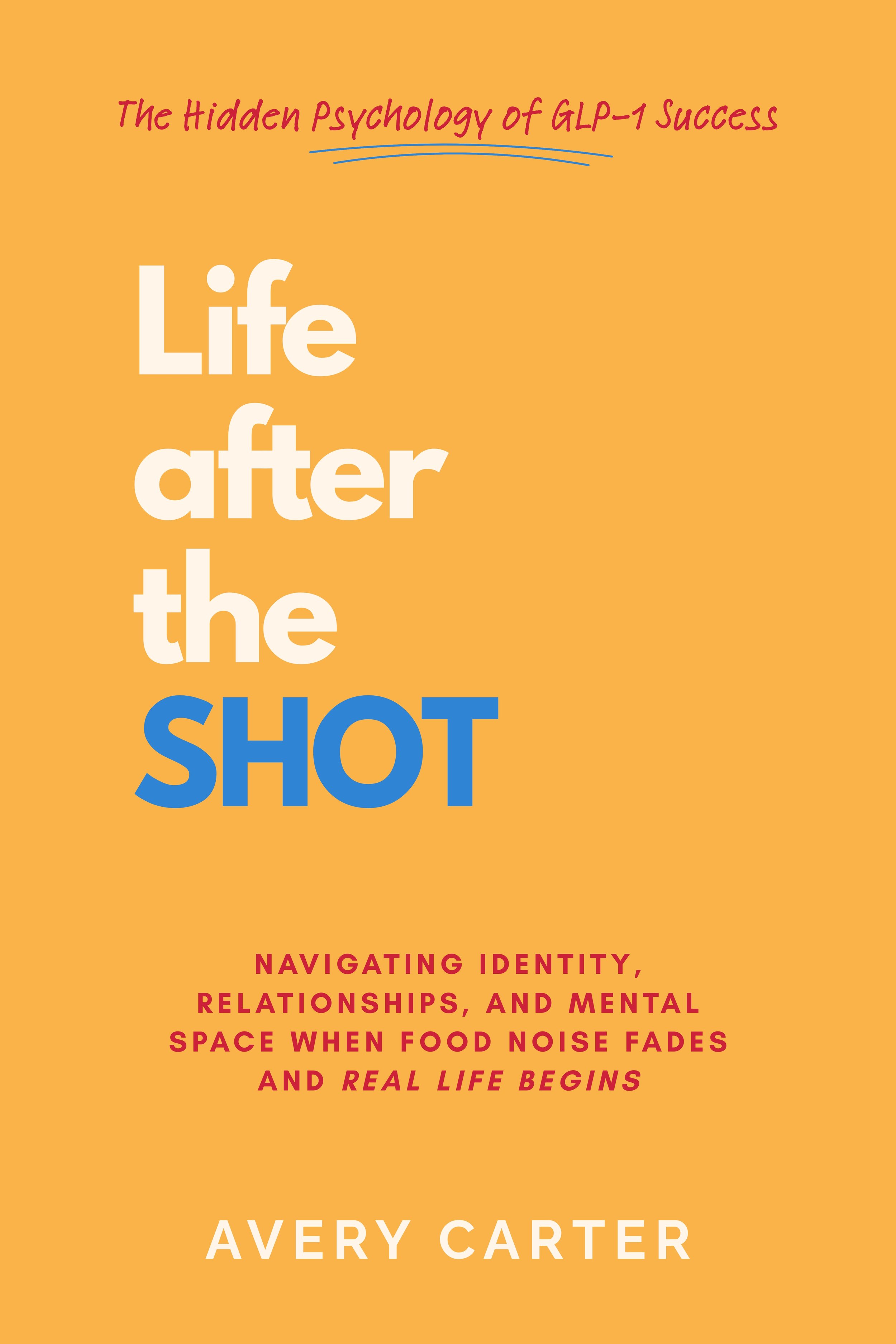
Coming Out March 3, 2026
The GLP-1 Revolution: Available on Amazon 👈
