
Why Your Dream Kitchen Starts in the Trash Can
A designer’s truth about space, clarity, and what actually works
The Kitchen That Waited 40 Years
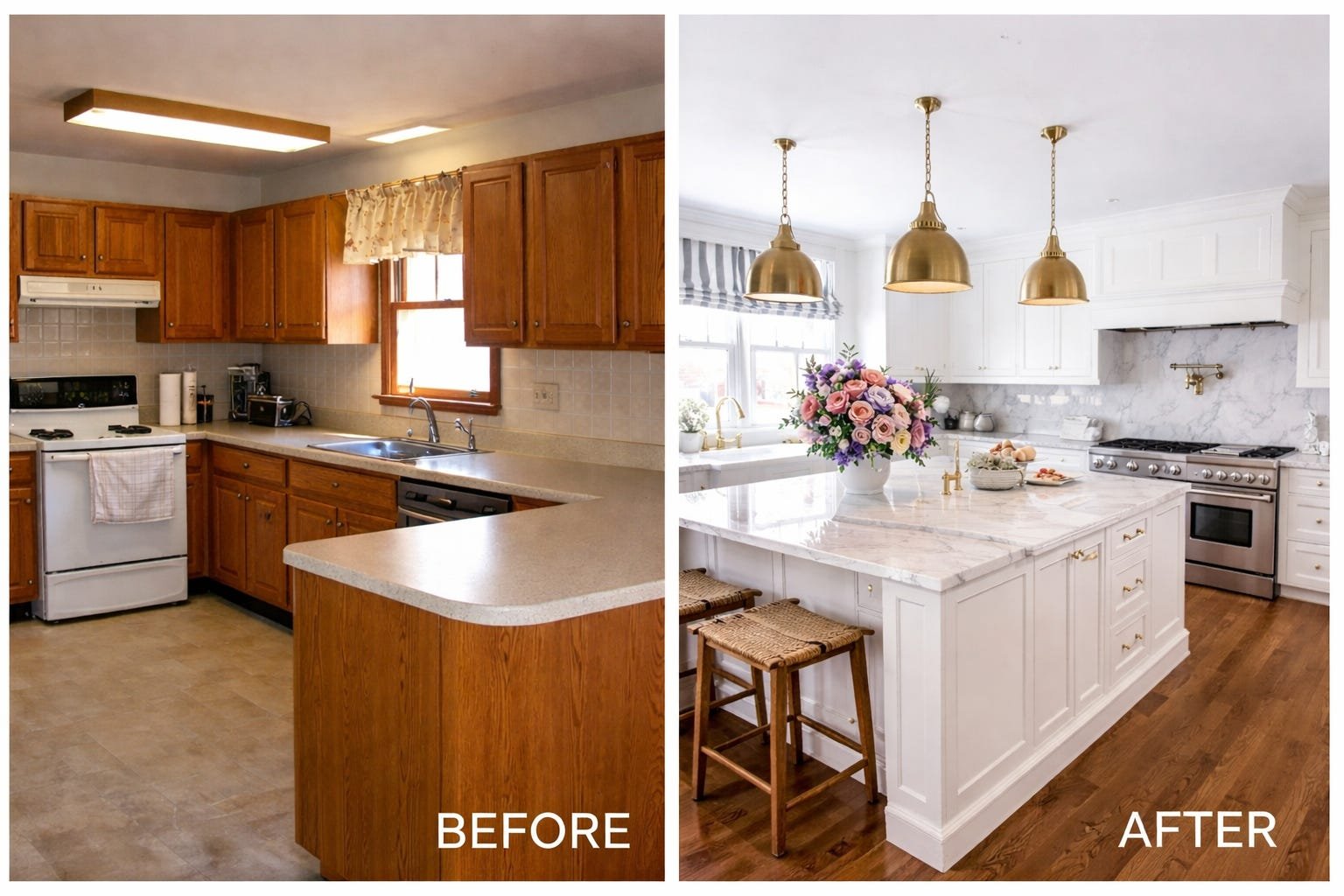
When Sarah and Tom called me about their kitchen renovation, they started with an apology.
“We know we’ve waited too long.”
That is never true, but people always start there.
Their kitchen was from 1984. Almond appliances, oak cabinets, laminate counters. It had raised three kids (one of whom is actually now a chef), hosted holidays for decades, and survived the chaos of teenage life. It wasn’t broken. It just didn’t fit them anymore.
The rest of their house had evolved. Calm, intentional, comfortable. The kitchen still felt like 1984—and not in a charming way.
They wanted what most people want: an island where friends could gather while they cooked. Counter space that could actually breathe. Storage that made sense. A kitchen that felt like part of the house instead of a time capsule.
I told them we’d get there. But first, I needed them to do something uncomfortable.
Empty every cabinet. Put everything on the dining room table. Look at it all at once.
“Everything?” Sarah asked.
Everything.
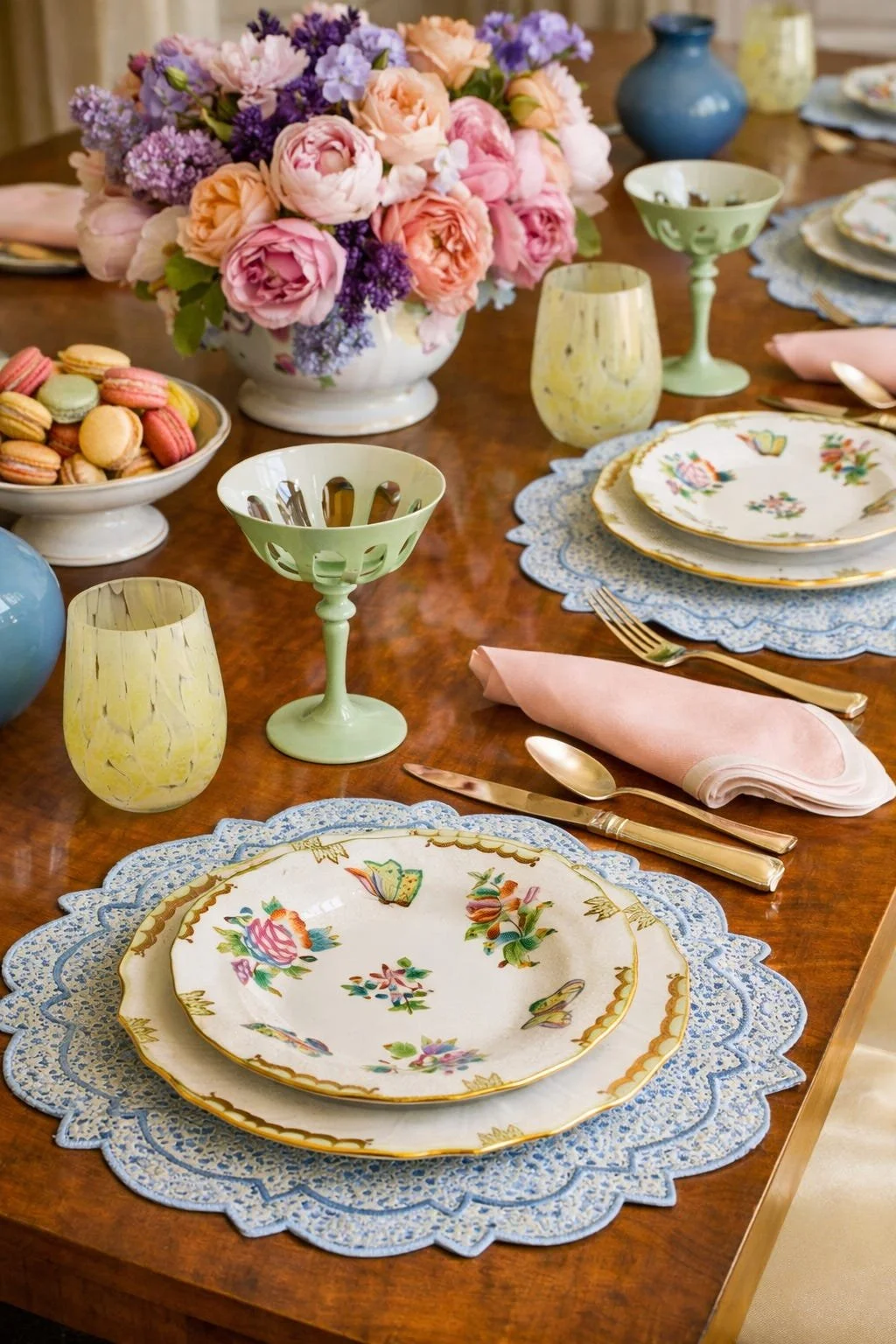
The dining room table moment
It took them a weekend.
Saturday was the great emptying. Sunday morning, I got the texts:
“Is this normal?” (Photo: thirty plastic containers, most missing lids.)
“We found FOUR cheese graters.”
“I don’t even remember buying this.” (Photo: a fondue pot, still in the box.)
This is what happens when you live with a kitchen for 40 years. Things accumulate. Gifts you felt obligated to keep. Gadgets from aspirational phases. Duplicates bought because you couldn’t find the original. Wedding registry items that never stood a chance.
When everything is tucked away in cabinets, it’s easy to ignore. But when you see 47 coffee mugs, 12 spatulas, and 8 cutting boards all at once, reality hits.
I asked them to sort everything into three categories:
Love and use daily. The things they reached for first. The items that fit how they actually cook.
Like, but rarely use. Nice to have, but not essential. Good condition, but not their first choice.
Keeping for the wrong reasons. Doesn’t fit their current life. Kept because it was expensive or a gift. Broken, stained, or forgotten. Representing who they used to be, not who they are.
The sorting took another weekend. And it was harder than they expected.
The fondue pot
“I cried over the fondue pot,” Sarah told me later.
It had been a Christmas gift from her grandmother, and her memory finally kicked in on where it had come from. They used it once—maybe 1985?—and put it back in the box for safekeeping. Forty years later, there it was. Still in the box.
Letting it go felt like letting go of her.
This is the part no one tells you about kitchen renovations. It’s not just about cabinets and countertops. It’s about confronting past versions of yourself. The person who thought they’d make homemade pasta every week. The person who received gifts with good intentions. The person who kept things just in case.
I remember walking into a client’s (we’ll call her Judy) kitchen several years ago for what should have been a routine Monday meeting. Judy was downsizing from the home where she’d raised her kids, entertained friends, and where her mother had lived before she passed away. Beautiful architecture, inviting rooms, and an amazing collection of antiques and artwork. We’d started in the kitchen because it seemed like the most technical spot—the least emotional place to begin.
Judy spent the weekend emptying the cupboards as I’d asked.
When I arrived, she was sitting at the kitchen table surrounded by stacks of beautiful dishes, tears streaming down her face.
I paused. Collected my thoughts. Sat down next to her.
She told me she was overwhelmed. Not just by the memories, but by the thought of letting her collections go. Her kids weren’t interested in her “old” things, she said. They wanted Pottery Barn, not Herend.
I was sad too, if I’m honest. Not because there’s anything wrong with Pottery Barn, but because certain old-world pieces just aren’t available anymore. Or if they are, the price tags make them unattainable for years. I knew her kids might regret that choice someday.
But that wasn’t the point. The point was helping her move forward.
We sat together and created a plan. Just because she was moving, she wasn’t going to stop entertaining just because she was downsizing. That was her lifestyle, and it wouldn’t change. So she would need (and should absolutely keep) some of those beautiful dishes, some of the serving pieces.
We looked at which sets she actually reached for and loved versus which sets were her mother’s, beautiful, meaningful, but heavy with memories that felt impossible to carry.
We photographed everything. Sent the photos to family one more time. From there, we decided what to sell and what to donate.
One set ended up in a museum. Fabulous! Now everyone could enjoy it.
Other sets were sold to collectors who would actually use and love them. When faced with losing the option forever, her kids each decided to take a set. I’m sure they set the table with them every time their mom comes over.
The overwhelm was real. The solution needed a soft but methodical touch.
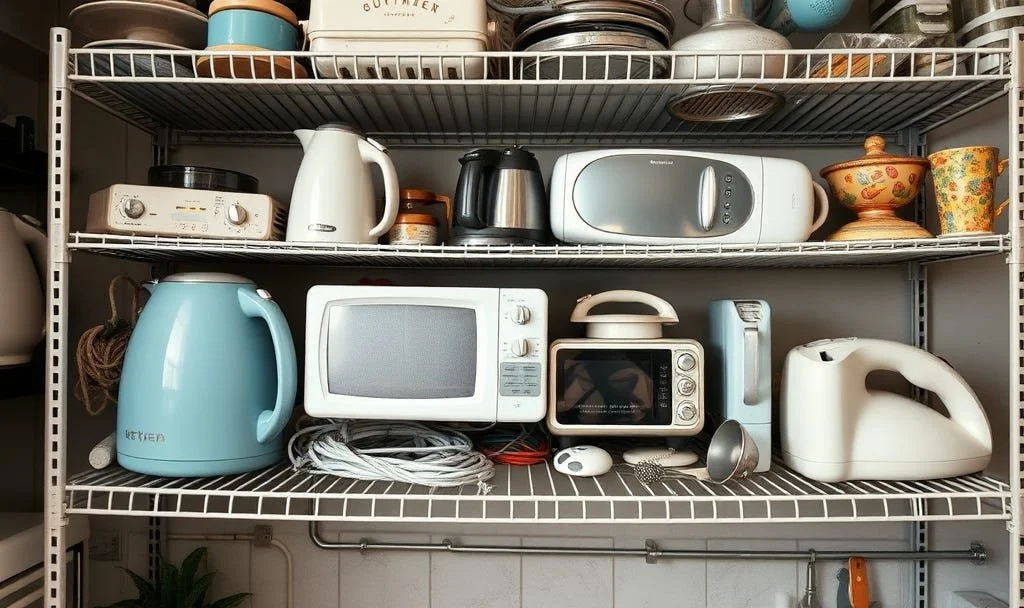
The purgatory shelf
Here’s where I break my own rules.
If someone is truly struggling to let go of a few things—not everything, just a few emotionally complicated items—I allow a small compromise.
I call it purgatory.
One shelf in the attic or basement. Not in the kitchen. Somewhere out of the way.
Items can sit there for twelve to eighteen months. No exceptions. No extensions.
If something comes off that shelf repeatedly and earns its way back into real life, it stays. If it doesn’t, it gets donated to someone who will actually use it.
Most things quietly fail this test.
Sarah put the fondue pot in purgatory. Six months later, she donated it to a young couple who was genuinely excited to use it. She took a photo first. Wrote down the memory. Let it go.
“The memory lives on,” she told me. “The pot gets a second life. And we get cabinet space for things we’ll actually use.”
What they discovered
By the time Sarah and Tom finished decluttering, they’d reduced what they owned by 40%.
They also realized something that changed the entire project: they didn’t need the massive floor-to-ceiling pantry cabinet they’d been planning.
Original plan: $4,200
What they actually needed: A standard pantry with pullout shelves and a few specialized inserts for what they really used.
Cost: $1,200
Savings: $3,000
But the real savings wasn’t financial. It was mental.
“I didn’t realize how much energy the kitchen was taking,” Sarah said. “Once the clutter was gone, everything felt easier.”
That’s what clarity does. It can also free up some $$ for fun new inserts, an arched glass cabinet or an increase in the countertop or lighting budget. 😉
The weekend challenge
If you’re thinking about renovating, or even if you’re just tired of how your kitchen feels, try what Sarah and Tom did, but start small - you dont have to tackle the entire kitchen yet, dip your toe in and see how it feels:
Saturday: Empty one category. Not everything. Just pick one. Mugs. Utensil drawers. The pantry. Pots and pans. Put it all on the table or counter. Don’t make decisions yet. Just look.
Sunday: Sort honestly. Love and use daily. Like, but rarely use. Keeping for the wrong reasons. See what patterns emerge.
You’re not committing to anything. You’re just paying attention.
That awareness is what good design depends on.
If you’re feeling stuck
The sorting is where it gets emotional. That’s normal. Kitchens hold more than dishes. They hold past versions of ourselves, good intentions, gifts from people we love, and a lot of “someday.”
If you find yourself stuck between categories, feeling guilty about expensive mistakes, or realizing your kitchen is holding onto who you used to be instead of who you are now, you’re in the right place. That’s the real work.
I created a guide that walks through the emotional side of decluttering and downsizing. The part that makes people cry over fondue pots and Herend china. It’s the same framework I use with clients before we ever talk about cabinet styles. The psychology of why we keep things, how to make decisions without guilt, and how to create a kitchen that supports your actual life.
Where dream kitchens actually start
Sarah and Tom’s renovation took 18 weeks from demolition to completion. But the transformation really began that weekend when they emptied their cabinets and got honest about who they were and how they wanted to live.
The most beautiful kitchens aren’t about what you add.
They’re about what you choose to keep.