
After three decades in design, I can’t walk into a room casually anymore. Here’s what my brain does the second I step inside.

I can’t turn it off.
I’ve tried. I walk into a friend’s house for dinner, a vacation rental, an open house I have no business being at, and before I’ve even set down my bag, I’ve already read the room. Not judged it. Read it. There’s a difference.
It’s a little like how a musician hears an off note before anyone else does. After enough years in design, certain things just announce themselves.
The space that ruined me for this was a penthouse I walked into early in my career. I was there in my designer capacity, and I remember stopping just inside the door because something about it was... miraculous. That’s the only word I’ve ever found for it.
It felt calm. Lived in. It didn’t try too hard. The artwork was clearly the focus, but in the most understated way possible. Nothing screaming “look at me,” everything quietly saying “I belong here.” Every piece looked like it had been collected over time, chosen with the kind of patience most people don’t have. I couldn’t tell if the room had been designed all at once or had evolved over decades, and honestly, I didn’t care. The effect was the same.
It was one of the only spaces I’ve ever walked into and thought: there is not one thing I would change.
I quietly thanked the heavens that I was actually there to talk about revamping their lake house out in the rural woods and not the penthouse itself. Because if I’m being honest? If the job had been this space, I would have had to turn around and walk right back out without a thing to do.
I tracked down the designer’s name afterward. She wasn’t famous in an Architectural Digest sort of way, but I’m sure she was a legend among the people lucky enough to work with her. That penthouse set a standard I’ve been chasing ever since.
Over the years, I’ve realized there are a handful of things that separate spaces like that one from everything else. Designers notice them within seconds of walking through a door.
A quick aside before I get into it: I don’t walk into every home and judge what I see. I notice things, but it’s more curiosity than critique. People live all sorts of ways and I genuinely love observing how someone has made a space their own. If they ask, I’ll adjust. But I’m never standing in your living room mentally rearranging your furniture. (Okay. Almost never.)
1. The Entry Moment
The first five seconds inside a home tell you almost everything about how the rest of it will feel.
It’s not about what’s on the walls or what the floors look like. It’s about whether the space pulls you in or holds you at the door. Light, sightlines, air. Does the room breathe, or does it feel like it’s holding its breath?
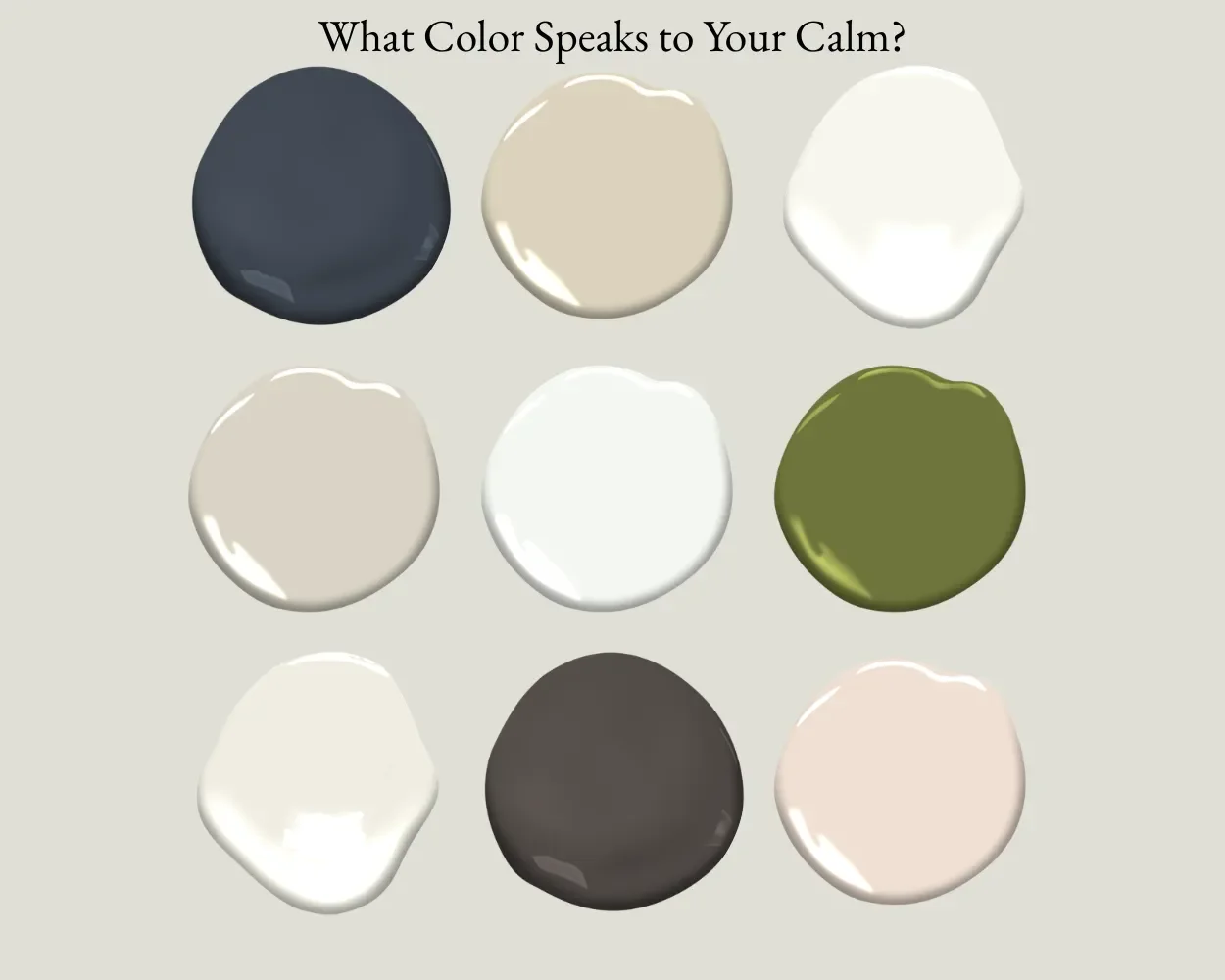
I worked with a couple a few years ago who had donated literally everything they owned and were starting from scratch in a new build. No furniture, no art, no vision yet. Just rooms. The first question I asked them wasn’t about what color goes on the walls. It was: how should that color make you feel?
We spent a lot of time talking. About their childhood homes, magazine photos they kept coming back to, what comfort meant to them. Turns out they were casual elegance people, all the way. The kind of couple who wants friends to drop by unannounced and end up staying for hours around a giant table, eating and talking. That told me everything I needed to know. Kitchen is important. Open floor plan. Warm and welcoming with easy comfort and lots of seating that’s comfortable for hours at that giant table. Soft, warm, timeless colors.
But it all started with how they wanted to feel the moment they walked through their own front door.
Designer’s Tip: Before you pick a single paint color or browse a single furniture site, choose your anchor feeling. That one vibe that will guide you through a whole house renovation or just one room. Maybe it’s “calm.” Maybe it’s “warm and lively.” Maybe it’s “cozy but sophisticated.” Whatever it is, write it down. Put it on a sticky note. Because when you’re drowning in choices (and you will be), that anchor feeling is what pulls you back to center. Every decision gets easier when you know what you’re trying to feel.
2. The Lighting
Lighting is the fastest way to tell whether a home has been thoughtfully designed or just... assembled.
That penthouse I mentioned? Part of why it felt so extraordinary was the lighting. The overhead fixtures existed to highlight the artwork, softly and deliberately. The lamps existed to draw people into conversation areas. The window treatments were understated enough to let natural light pour in during the day and the twinkle of city lights take over in the evening. Nothing competed. Everything cooperated.
Most homes don’t work this way. Most homes have one overhead light doing all the heavy lifting in every room, casting the same flat, slightly harsh glow on everything. It’s the design equivalent of fluorescent lighting in a dressing room. Technically functional, emotionally terrible.
Good lighting rarely announces itself. It just makes everything else look better.
Designer’s Tip: Splurge on a lamp. Seriously. One really good lamp can change the entire mood of a room. And here’s the fun part: there are so many cute cordless options out there now that you can put lamps in places that would have been awkward or impossible a few years ago. That dark corner, that deep bookshelf, that hallway that always felt a little gloomy. A lamp doesn’t need a plug anymore, which means it can go almost anywhere.
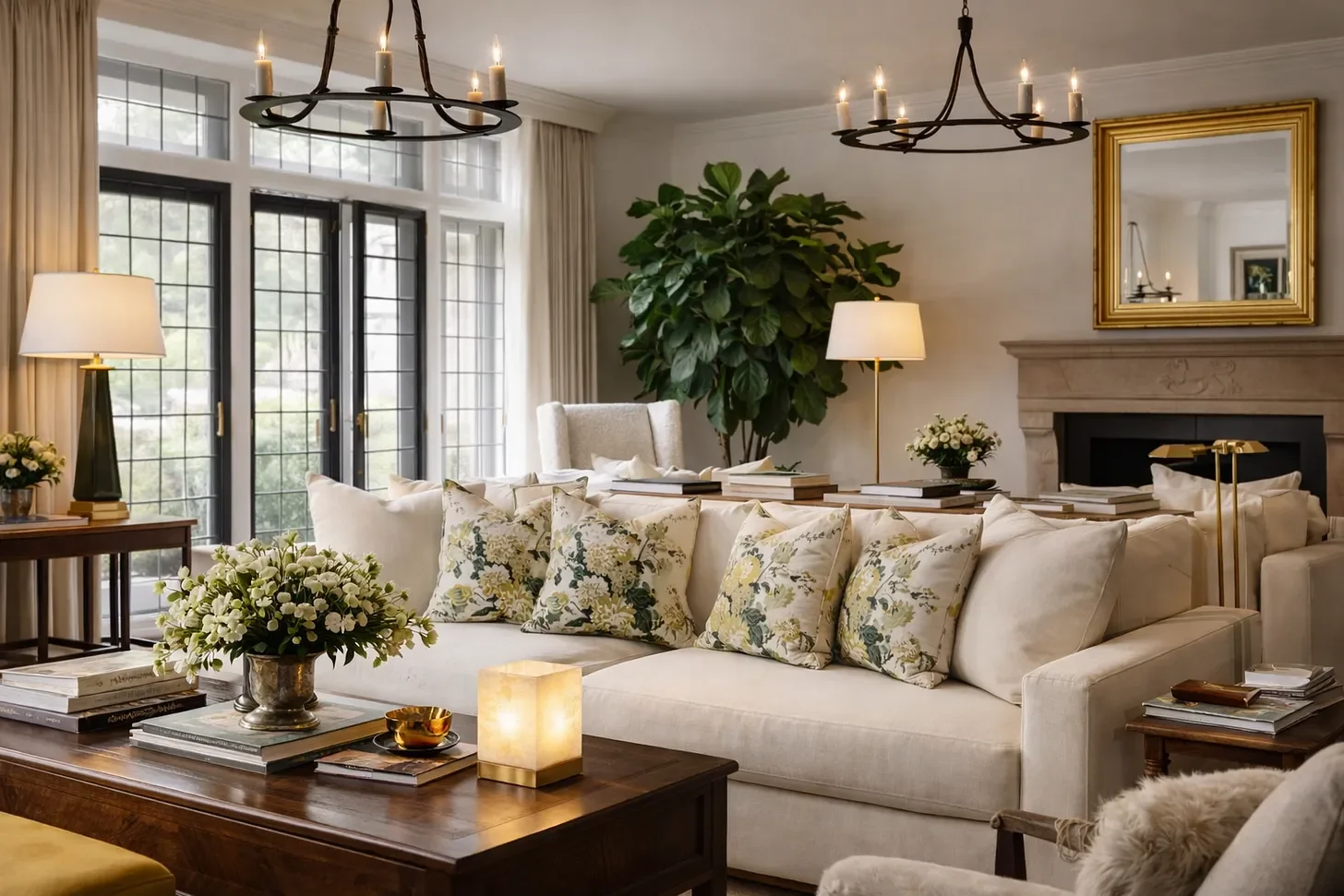
Layered Lighting: Overhead, Task, and Lamp Lighting Create an Elegant Ambience
3. The Balance of the Room
Designers instinctively read proportion, and when it’s off, we feel it before we can name it.
I had clients once who had gorgeous taste. Beautiful furniture, quality pieces, everything individually lovely. But when I walked in, something felt wrong and it took me a moment to figure out what. Every single piece was lined up against the walls. The sofa against one wall, chairs against another, the console table pressed flat against a third. It felt a lot like a furniture showroom. Everything was beautiful but nothing was having a conversation.
The room was technically a living room, but it was functioning as a pass-through space. People walked straight through it to get where they were going because there was nothing inviting them to stop, sit, stay.
It took some convincing. Most people think furniture belongs against walls. It feels tidy, it feels logical, it opens up the floor. But people can walk around furniture if the pathway is inviting. Your living room is not a hallway. It’s meant for sitting and socializing. Once we pulled things away from the walls, angled a couple of chairs, and created actual conversation areas, the whole room changed. Same furniture. Completely different feeling.
Designer’s Tip: Area rugs are one of my favorite tricks for this. Using rugs to delineate different zones within a large space makes a room feel inviting and warm while adding visual interest. A rug under your conversation area, a different one anchoring a reading nook. Suddenly one big room has purpose and personality instead of just square footage.
4. Personality vs. Perfection
The most memorable homes I’ve ever been in rarely look perfect. They look lived in.
I think about two clients in particular. One was a young couple with four kids and an amazing house, but they were ready for the next chapter. The toddler era was over and the house hadn’t caught up yet. We’re talking a giant formula-stained brown sectional and rows of cubbies overflowing with toy baskets. But the play dates were done. Now it was pre-teen and teenager hangouts, and those kids needed spaces that still felt like part of the family and the house, not leftover toddler zones they’d outgrown. The parents didn’t want to erase the family from the room. They wanted a space everyone could enjoy, something easy to maintain but more sophisticated, with real comfort baked in. The personality was already there. It just needed to grow up a little.
The other was a blended household. Two people coming together later in life, merging two homes’ worth of belongings, memories, and taste. This is one of my favorite situations to walk into. We went through everything together. What stays, what goes, what they choose new, together. We mixed cherished vintage and antique pieces with a few things they picked out as a couple. We updated the wall colors. We ripped out the kitchen and made it a his-and-hers dream. The result was a home that told the story of two lives becoming one, and it had more character than any showroom could ever manufacture.
Personality beats perfection every time.
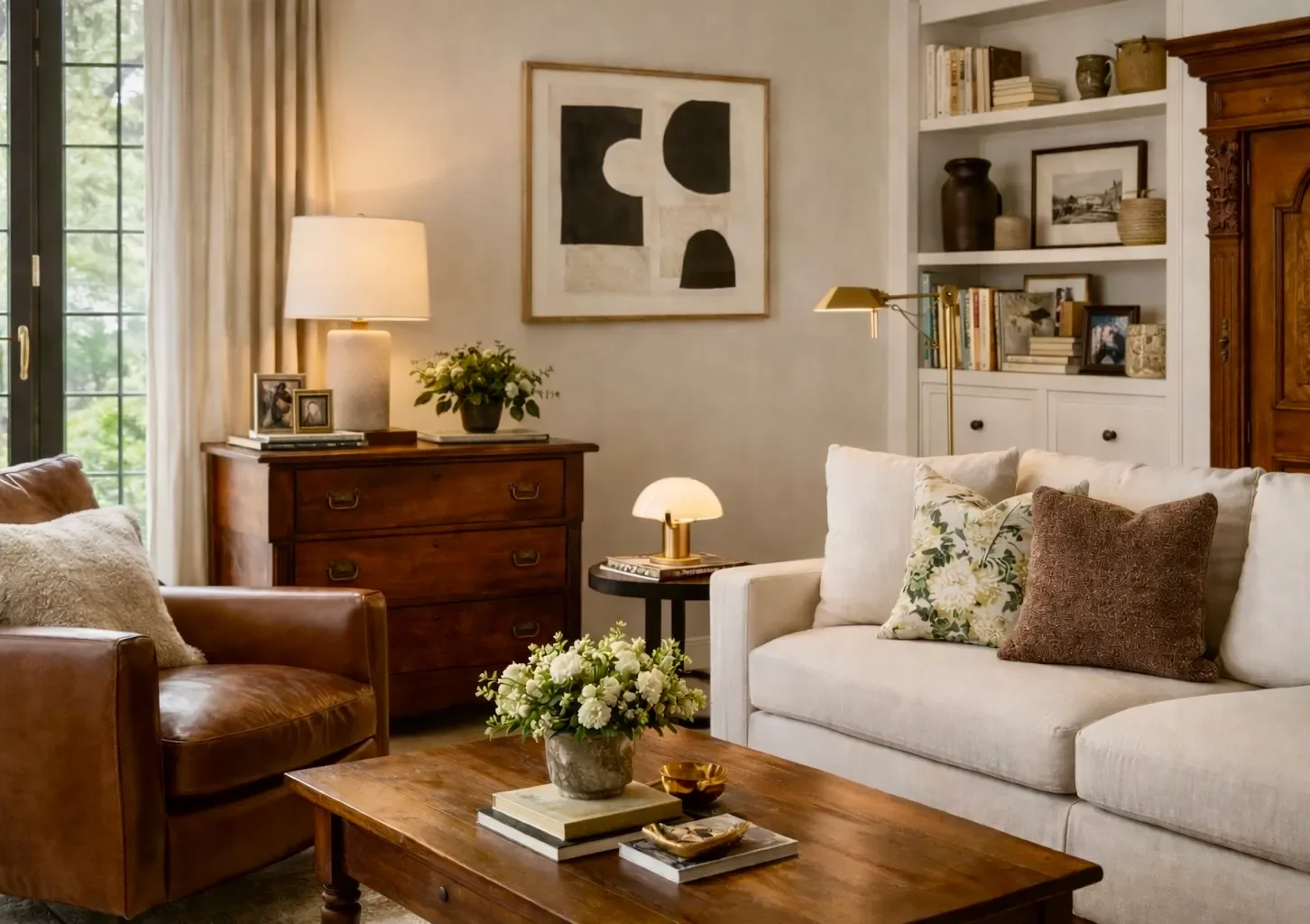
Designer’s Tip: Don’t erase the past. Choose your cherished pieces and let them evolve with your home. Place them carefully and with intention so they enhance what’s new instead of competing with it. A home with history woven into it will always feel richer than one that started from a catalog.
5. How the Room Makes You Feel
This is the one that matters most, and it’s the hardest to explain.
I keep coming back to that penthouse. Of course, a space like that had every reason to feel intimidating. Beautiful artwork, carefully collected pieces, the kind of home that could easily beg you not to sit down or touch anything. But it didn’t. It invited you in. That’s what made it special.
I didn’t walk in and think “the scale of the sofa is perfect” or “the art placement is genius.” I didn’t analyze anything. I just felt calm. Completely, immediately at ease.
Designer’s Tip: If you have special things, don’t be afraid to display them. Use them. But make sure the environment invites people to interact with the space, not tiptoe through it. Your beautiful objects should feel like part of the scenery, part of your life. Not like a museum exhibit or a magazine cover shot waiting to be disturbed.
That’s what great design does. It’s emotional before it’s visual. When all five of these things are working... the entry draws you in, the lighting wraps around you, the proportions feel right, the personality is real, and nothing is trying too hard... you don’t notice any of them individually. You just feel good. You breathe a little easier. You want to sit down and stay awhile.
A Little Free Advice From Someone Who’s Been Inside a Lot of Houses
Stop being afraid of your home. I mean that. So many people live in their spaces like they’re waiting for permission to enjoy them. Afraid to get it wrong, afraid it won’t impress, afraid to mix the vintage lamp with the modern sofa.
The homes that feel the best are never the ones trying to be perfect. Perfect isn’t fun to live in. Calm is. Inviting is. Personal is.
Mix and match, but keep it intentional. Use all of your space, not just the rooms that face the front door. Let your rooms breathe. Create conversation areas, a small reading corner, a workspace that actually works for your life. Furniture doesn’t need to line the walls and every room doesn’t need to serve just one purpose.
And yes, it’s always fun when someone walks in and loves your vibe. But the person who needs to love it most is you.
If all of that feels like a tall order? That’s okay too. Sometimes the hardest part isn’t knowing what you want, it’s knowing where to start. That’s literally what designers are for. You don’t have to do this alone, and honestly, even a single consultation with someone who speaks this language can save you years of living in a space that doesn’t feel like yours.
Next week I’m going to talk about how to find the right designer for you, and how to use what’s trending without letting your home become a victim of it. Because there’s a big difference between current and trendy, and your home deserves to be timeless.
The funny thing about design is that when it’s done well, it disappears. You don’t walk into a beautiful home and catalog what’s working. You just feel something shift.
That penthouse taught me early on that the best rooms don’t perform. They welcome. After three decades, that’s still the standard, and honestly, it’s still the goal every single time I walk into a new project.
The rooms that stay with you aren’t the ones that impressed you. They’re the ones that made you feel at home.